
CASE STUDY
Three missions. Each one bigger than the last.
Swim62 · Row400 · Walk1000 and Active Abu Dhabi, 2022–2025
THE CHALLENGE
None of the missions had been done before. Each was led by an athlete without an elite sport background, and in some cases without experience of the event itself. Together, they showed what an ordinary person can do with the right preparation and a clear purpose. All three had a fixed finish date, with the whole country watching.
The distances were hard in their own right, especially for people without a long history of endurance events behind them. And around them sat everything else: tides, boats, islands, desert camps, supplies, and a team that had to work together under pressure. So the question each time was the same: how do you give people the best possible chance of finishing something no one has done before?
AT A GLANCE
| Mission | Duration | Intensity | People | Main constraint |
|---|---|---|---|---|
| Swim62, March 2023 | 62 km in 33 hours 58 minutes | Moderate | Mansour, 3 coaches and a relay; 50+ swimmers in all | Fuelling |
| Row400, November 2023 | 413.4 km in 10 days, 9 island stops | Low | 4 rowers and a support team of 14 | Hydration |
| Walk1000, 2024 | 1,000 km in 30 days | Very low | 10 athletes and a support team of 50+ | Mental |
Each mission was less intense than the last, but longer, with more people and more moving parts. The main performance constraint shifted with it: from fuelling, to hydration, to the mind.
MARCH 2023
Swim62
One person’s idea, and a team to make it happen.
It started with Mansour Al Dhaheri. He watched Ross Edgley swim around Great Britain and wanted a challenge of his own: to become the first person to swim around the island of Abu Dhabi. He had only learnt to swim two years earlier. I was asked to come out as performance coach and project manager, to take his idea and make it happen.
The swimming was already in good hands. Mansour had his coaches and a training programme in place, so my performance work focused on two key constraints: injury prevention and fuelling. A swim of that intensity and length needed careful attention to carbohydrate: how much, how often, and training the gut to absorb it.
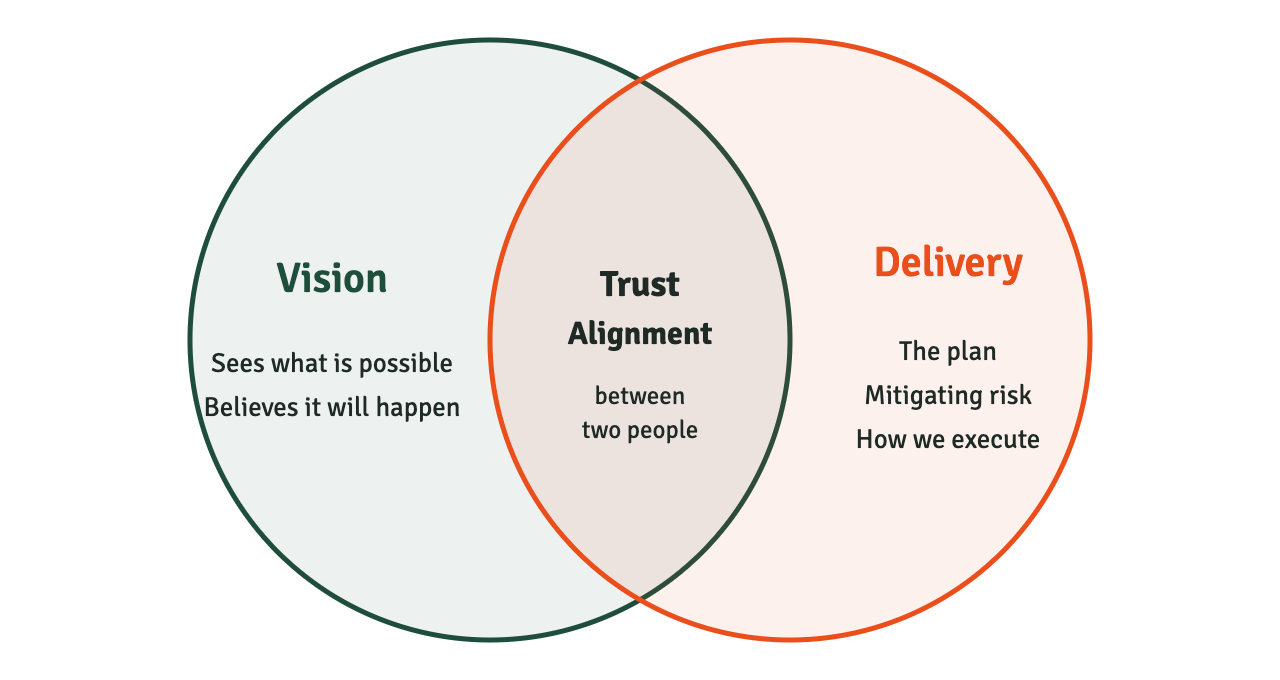
Good collaboration comes down to how two ways of thinking overlap. Mansour sees the vision and believes it will happen. My mind goes straight to delivery: the plan, mitigating risk, how we actually execute. The overlap between us was big enough to build a strong, trusting relationship, and that carried us through the hardest moments.
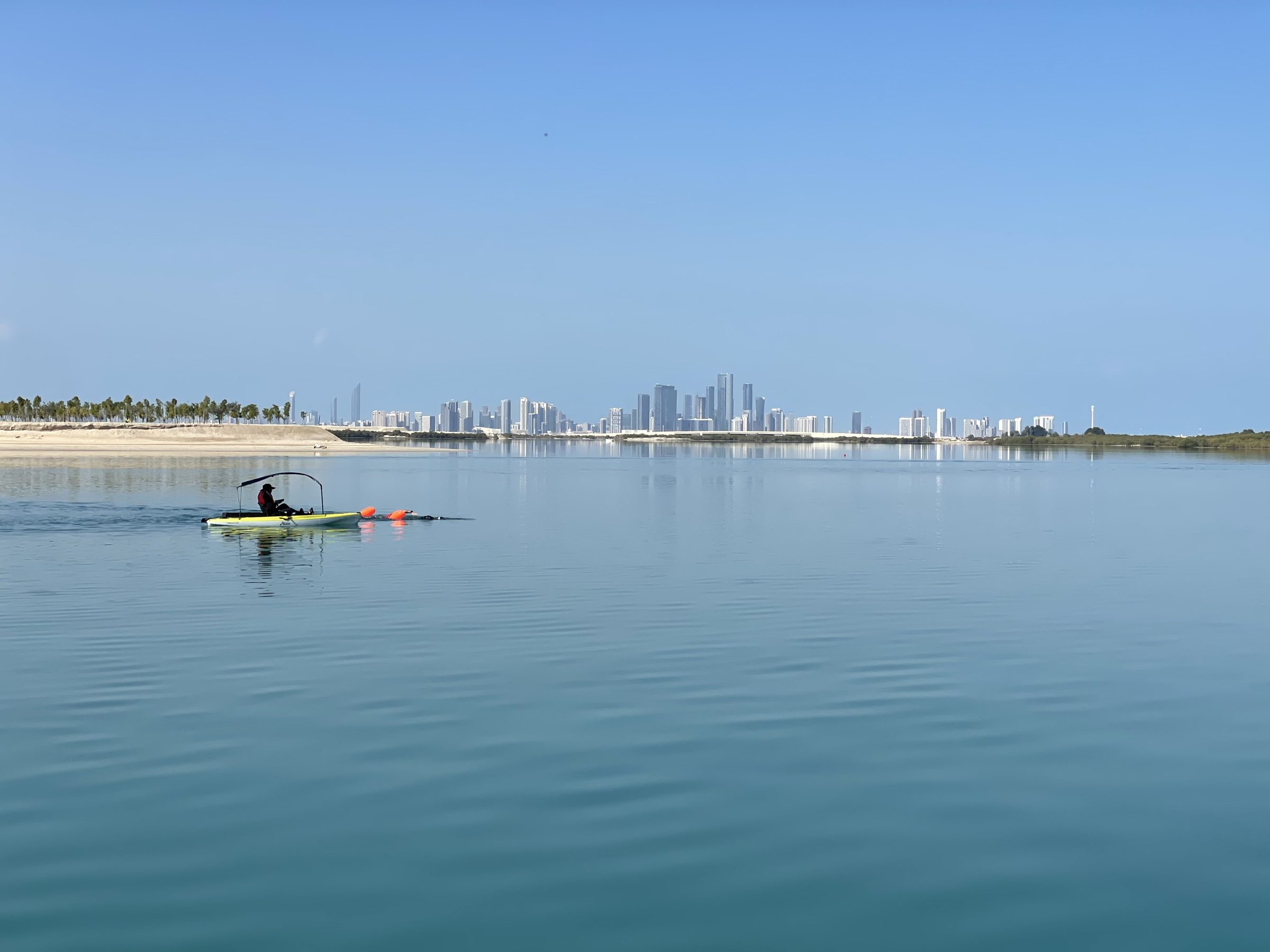
The plan was a continuous swim of around 40 hours, never touching land, with one short sleep taken on the boat. The channels around Abu Dhabi are strongly tidal, so we timed every leg to swim with the current and not against it. That built hard time limits into the plan: the swimmers had to reach certain points before the tide turned. Swimming pace is predictable at the start, but lack of sleep, fatigue and under-fuelling compound to make it much less so. That created a sense of jeopardy the film crew enjoyed. I did not.
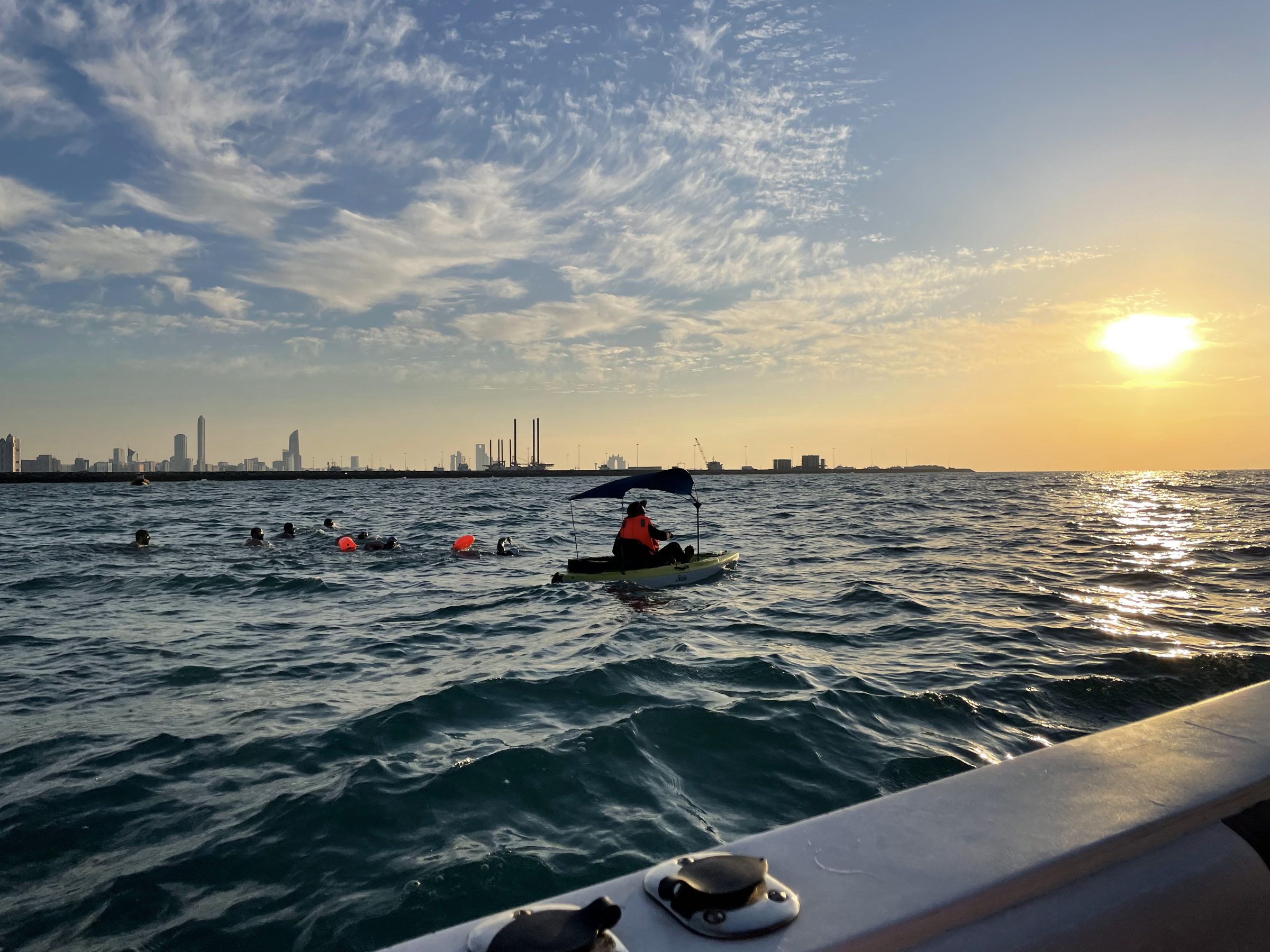
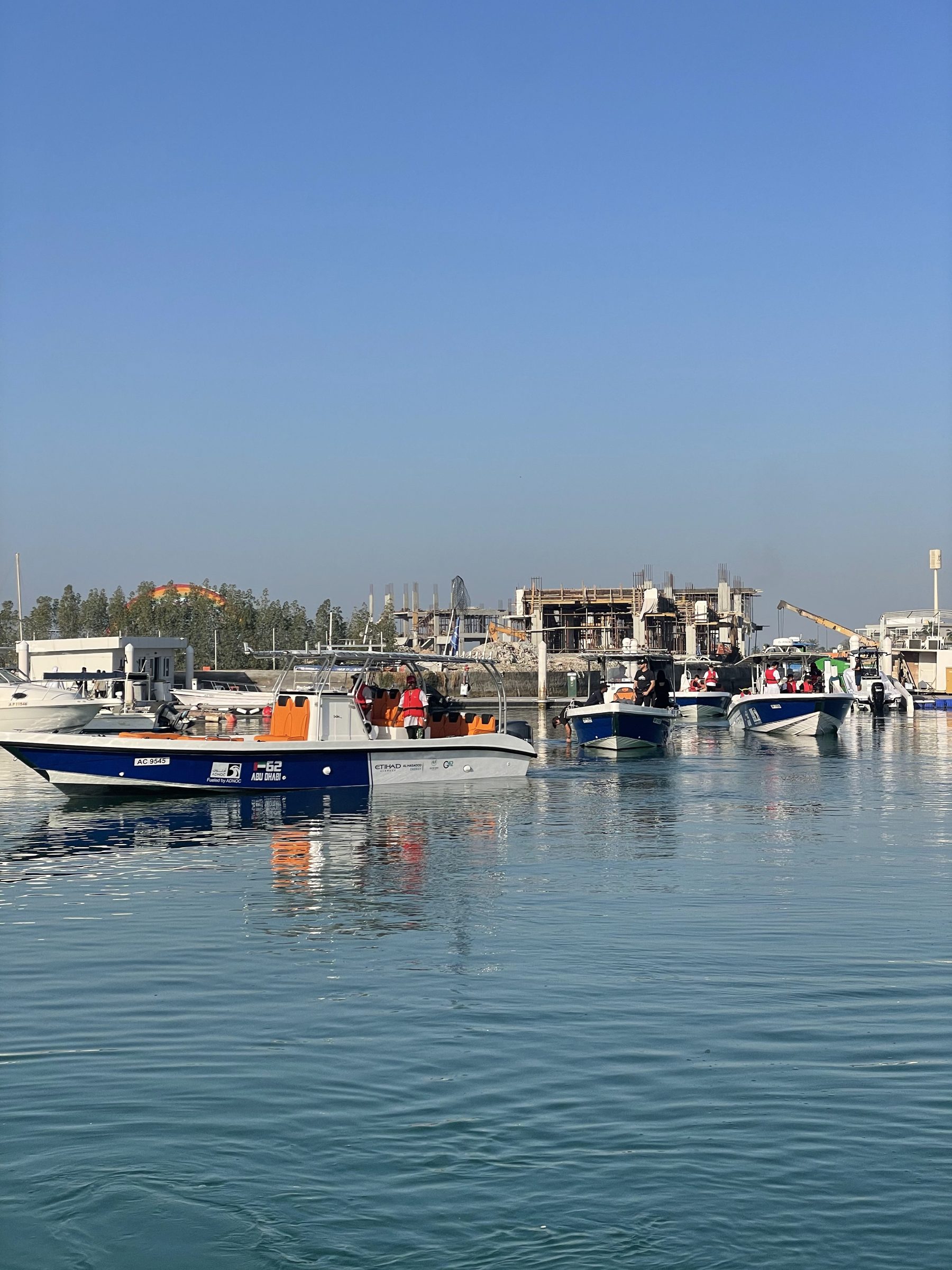
We did specific practice on the course, swimming sections of the route to learn how the tides worked and where the best line through each channel was. That helped the swimmers understand the water, and it let us predict where they would be at any point in the swim. It was just as much practice for the crew. We needed to know how everyone worked together, who responded well to pressure, and how people reacted when problems appeared.
It was never just one swimmer. Mansour swam with his three coaches, alongside a relay from the Al Jasmi brothers, who have swum for the UAE at the World Championships. Groups of women swimmers, the military and the police joined for parts of the route. More than 50 swimmers took part in all.
Control the controllables.
That was our motto. There was plenty we knew we couldn’t control, and plenty we couldn’t predict. Focusing on what we could control gave everyone a sense of security and certainty.
On the day, not everything went to plan, but everything was managed. Mansour, his coaches and the Al Jasmi brothers’ relay swam the full 62 km around the island in 33 hours and 58 minutes, well under the 40 hours we had planned for. Every group that joined finished its section.
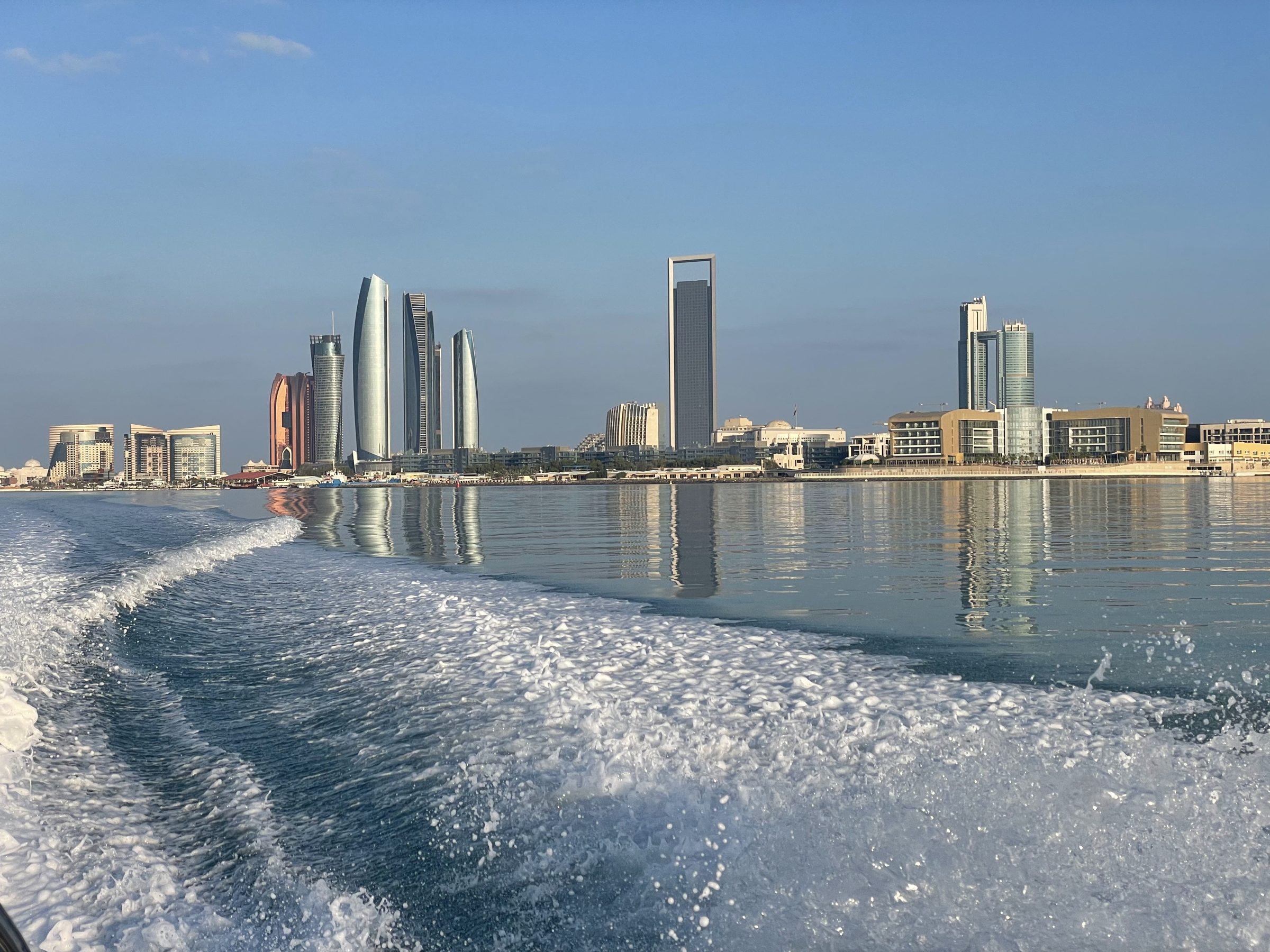
62 km
Around the island of Abu Dhabi
33h 58m
Well under the 40 hours planned
50+
Swimmers took part
NOVEMBER 2023
Row400
Ten days, four rowers, nine islands.
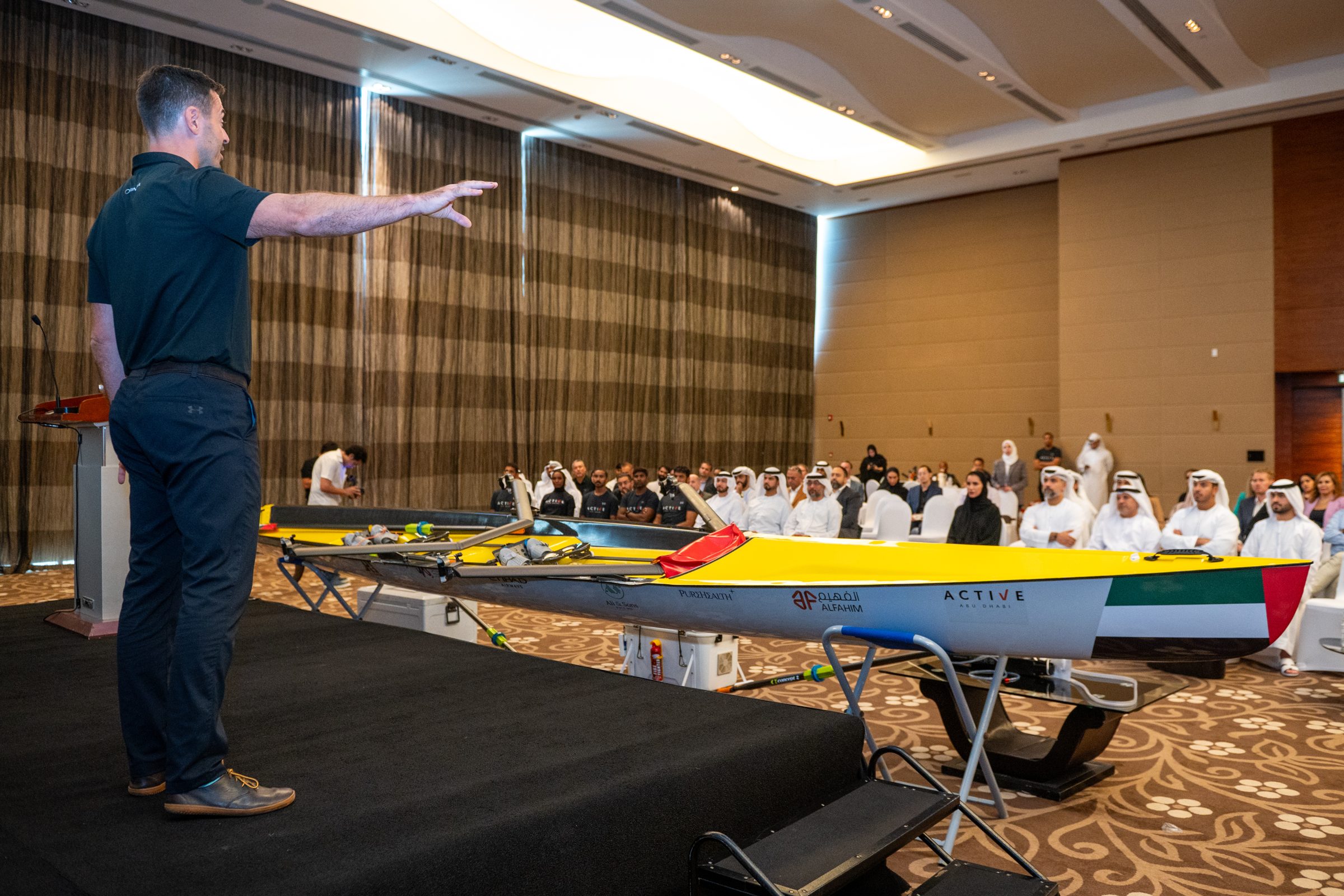
After a couple of months back in the UK to reset, I was asked to return for the second mission: rowing 400 km along the coast of Abu Dhabi. The route started out west in Al Dhafra and finished at Yas Island. Two pairs of rowers in coastal rowing boats would row by day and camp on a different island each night.
Around 40 km a day is a big ask for rowers new to this kind of challenge, and the distance was only part of it. This wasn’t rowing on a lake or a rowing machine. It was the open sea, with wind and waves, and the crews had to steer into the waves rather than take them side-on, even when that meant leaving the straight line.
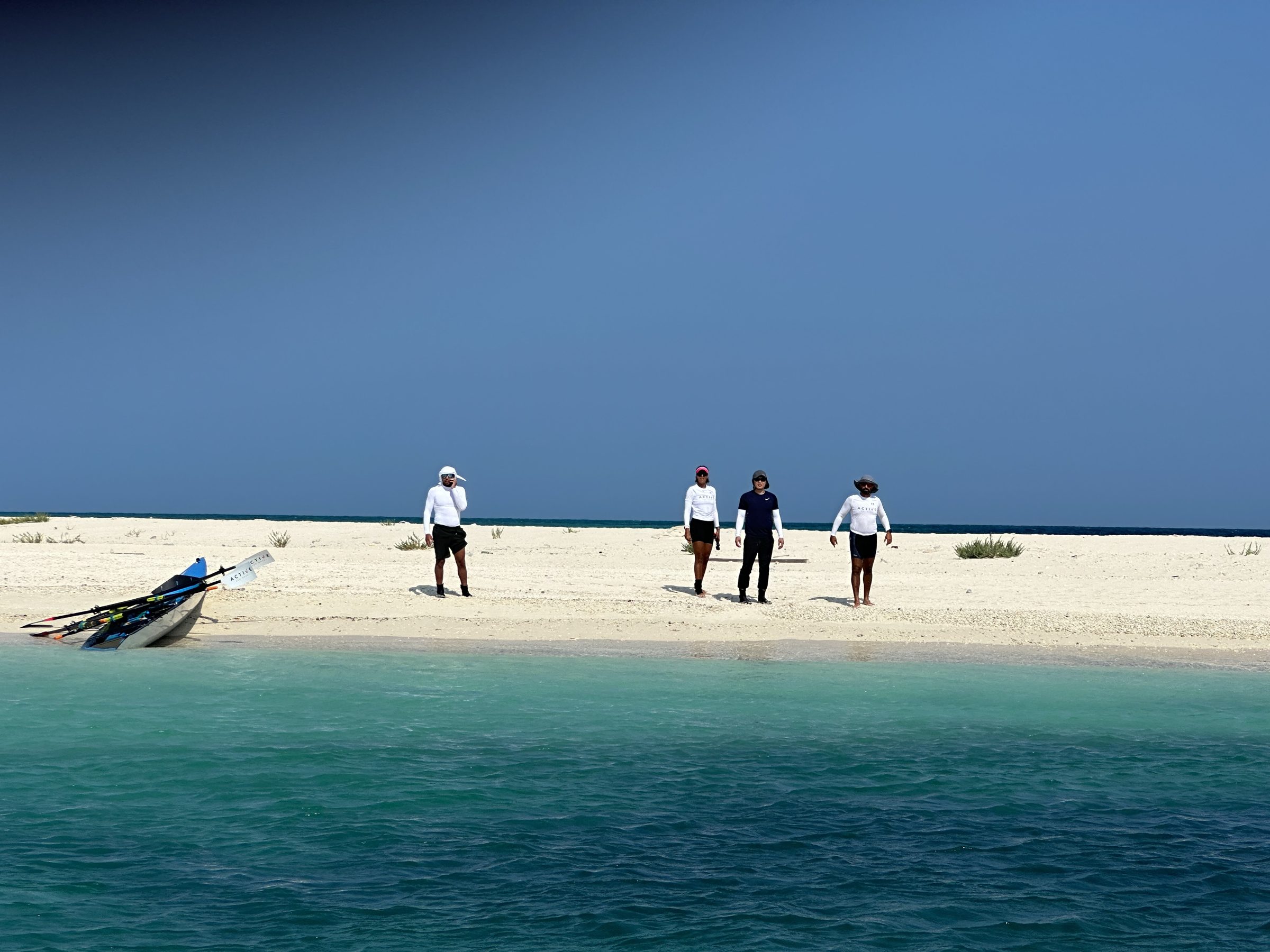
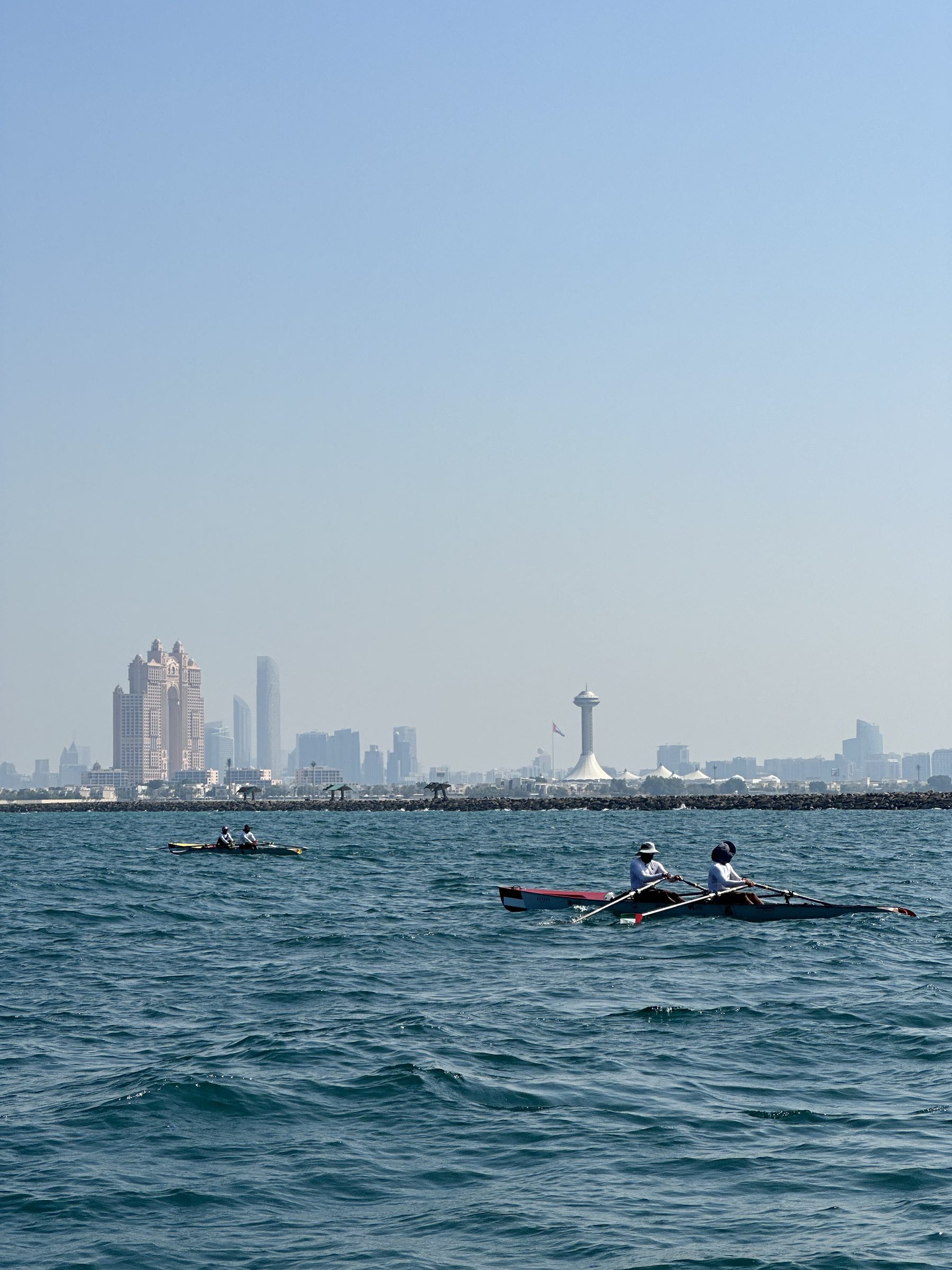
The big physical concern was hands. Rowing six hours a day brings blisters and rubbing, and salty sea water makes it much worse. Off the water, every supply had to arrive by boat, and breakfast had to be on the island before the rowers set off each morning. Logistics were tight, and ten days simply means far more time for things to go wrong.
The intensity of the row was lower, but the duration was higher. This meant the focus changed from fuelling to hydration. Hours of hard work in the Abu Dhabi autumn sun made heat the battle we couldn’t afford to lose. Each rower had a hydration plan based on their own sweat rate and sweat sodium concentration. They were surrounded by water, but every drinkable drop had to be timed and delivered by boat, so a performance problem was also a logistical one.
We used the same approach as the swim. A series of practice missions got progressively longer and harder, and went further out from Abu Dhabi to match the real conditions. We rehearsed the landing on each island. That was rehearsal for the rowers, and for the support crew: who was best for certain roles, and who would keep their head when things went wrong. With six months from start to finish, there isn’t time to change people. The job is to put people where their strengths are now.
If you want to go fast, go alone. If you want to go far, go together.
That was the row’s mantra. It reminded the four rowers that they weren’t just individual athletes, and kept the team effort behind the project, and everyone in it, front of mind. It became how the whole team, on the water and off it, thought about the mission.
The rowers had back problems, sore hands and everything else ten days at sea brings, and they kept going. Around them, the team made sure everything else supported them. When things went wrong, we had the people and the plans to deal with it.
413.4 km
Along the coast, Al Dhafra to Yas Island
225h 46m
Ten days, start to finish
9
Island landings
14
Support team
2024
Walk1000
Completing the trilogy.
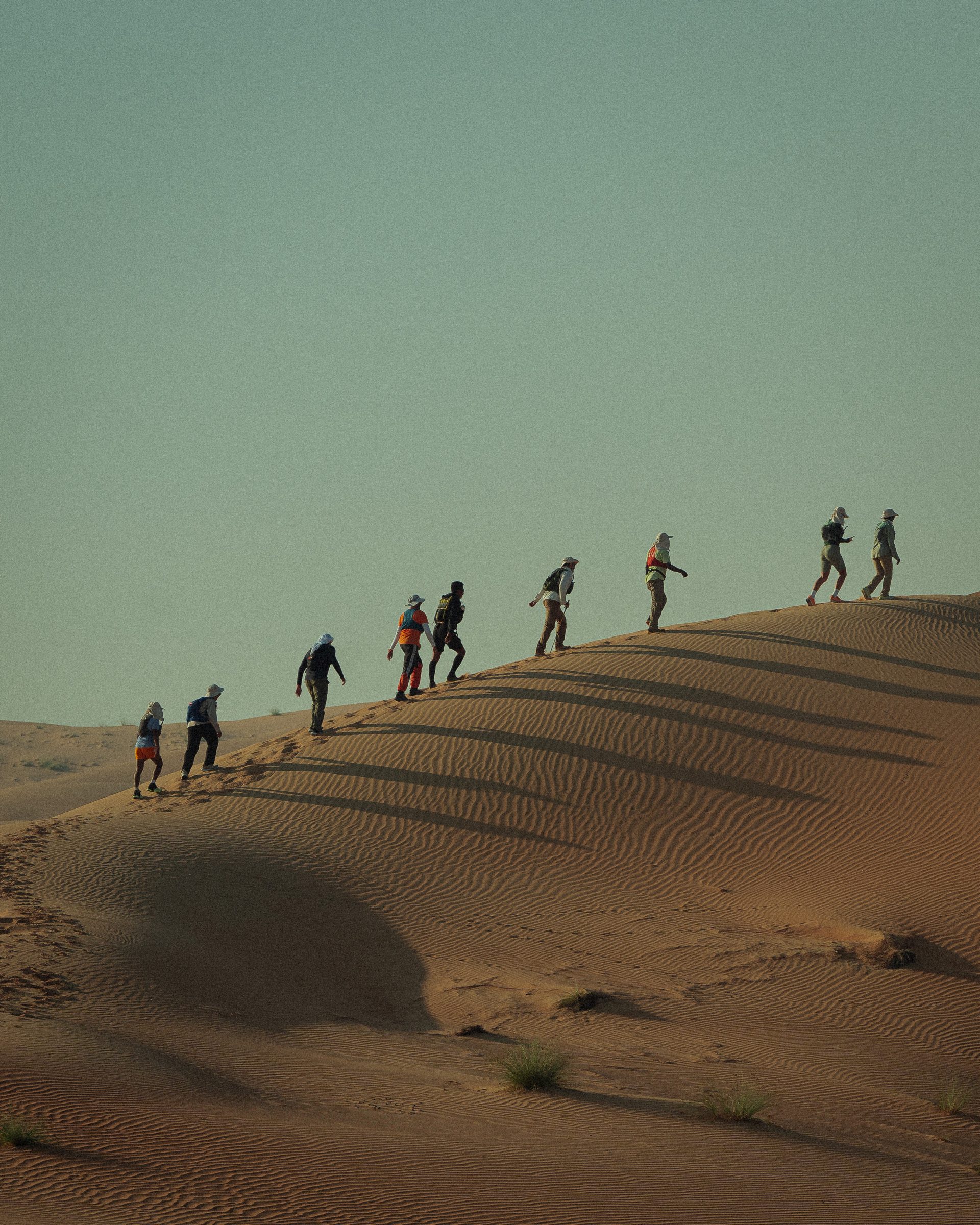
Two missions, two successes. The third was the biggest: ten athletes walking 1,000 km through the Abu Dhabi desert in 30 days. That’s three-quarters of a marathon every day for a month.
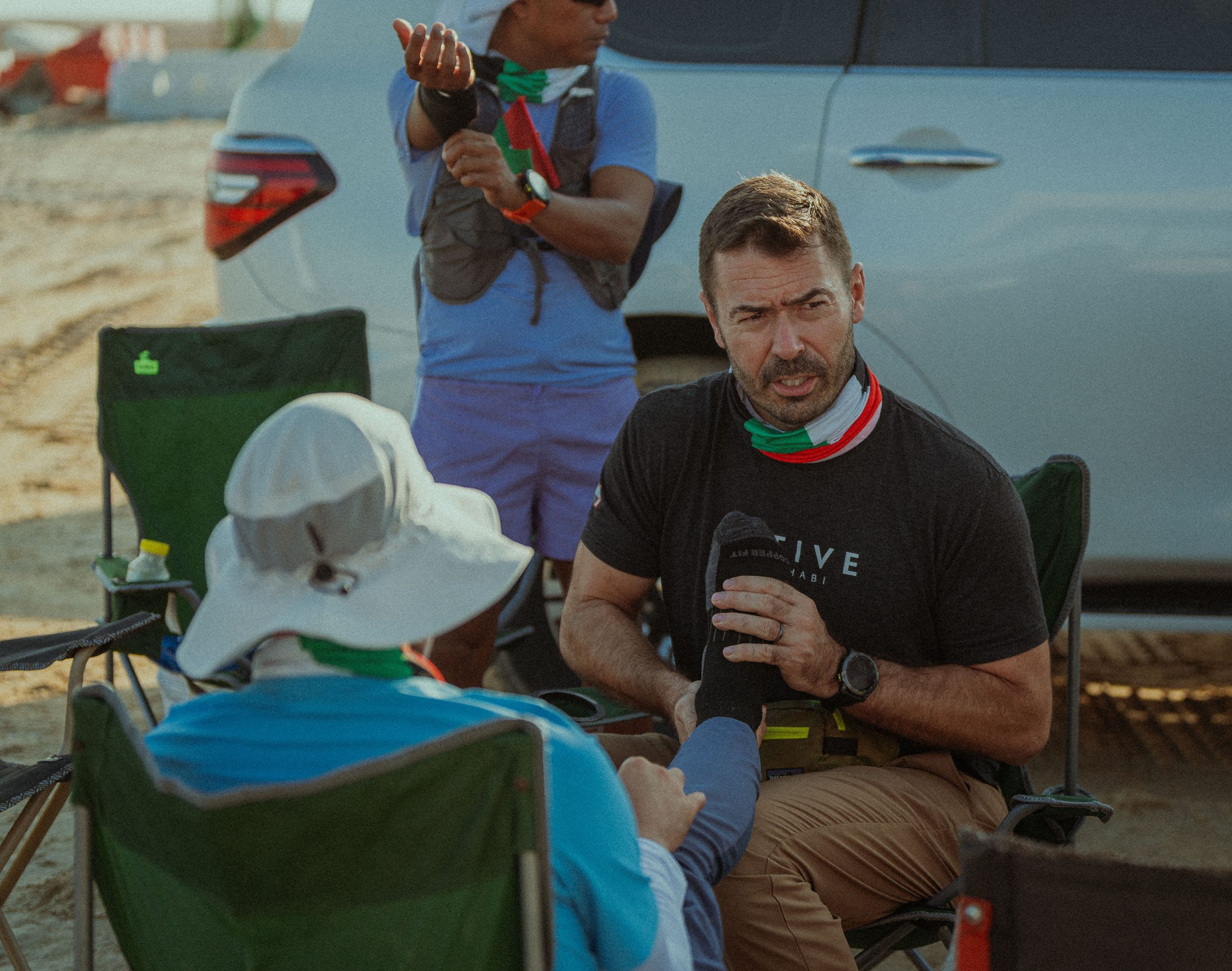
These weren’t ten athletes picked for their endurance. Some had strong running backgrounds, but the team also included an adventurer, a fighter, a rower and two people with minimal formal training. Six months later, they all walked the 1,000 km, 30 days back to back. I’ve spent my career around human performance, and this made me rethink what is possible. If you’d asked me beforehand whether it could be done, I wouldn’t have been confident. But my role isn’t to predict success. It’s to make success as likely as possible.
Walking is lower intensity again, but 30 days is a long time. Fuelling and hydration were still significant challenges, but the biggest constraint would be mental. Extreme endurance challenges are usually taken on by one person with a small support team, and keeping going is a big mental test. This mission was a team of ten. That brings the upside of people going through the same challenges together, and the downsides of any team: the personalities, the irritations, the conflicts. Both are magnified by exhaustion, time pressure and public scrutiny.
Everything scaled up: more athletes, a longer mission and a bigger support team. Thirty days meant a whole month for things to go wrong. A bigger team meant more complex logistics, more chance of human error and simply more people to feed and hydrate. Performance and logistics were no longer separate jobs.
Progress, not perfection.
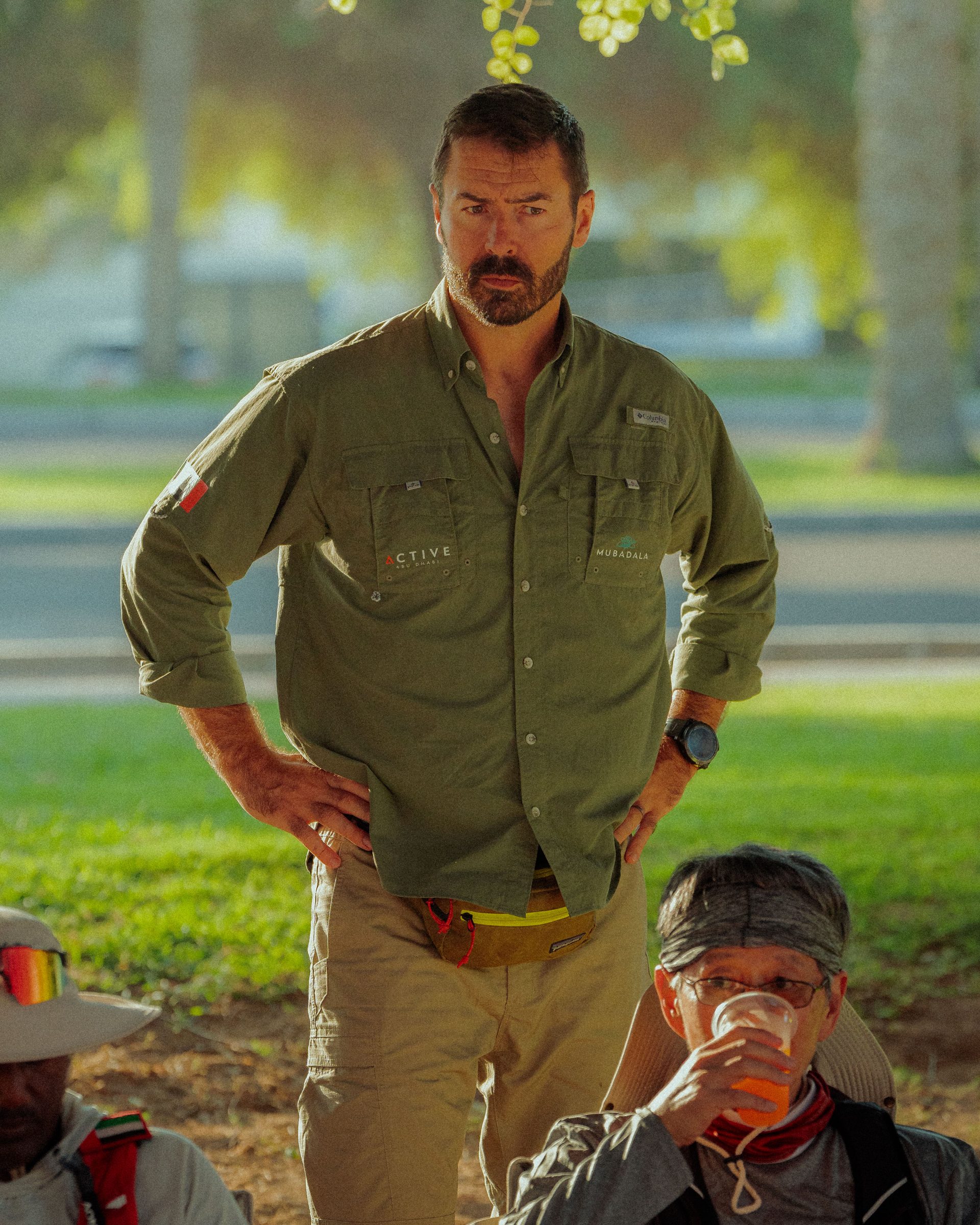
With a bigger team and more people doing this for the first time, nerves were higher, and that was our mantra. Aiming for perfection can make people anxious, and anxiety can cause people to freeze. Aiming for progress kept everyone focused on doing the next thing a little better, in the time we had.
The finish date was fixed, with no spare days built in. Every day had a set distance and a set camp. All ten walked every kilometre and crossed the finish line together.
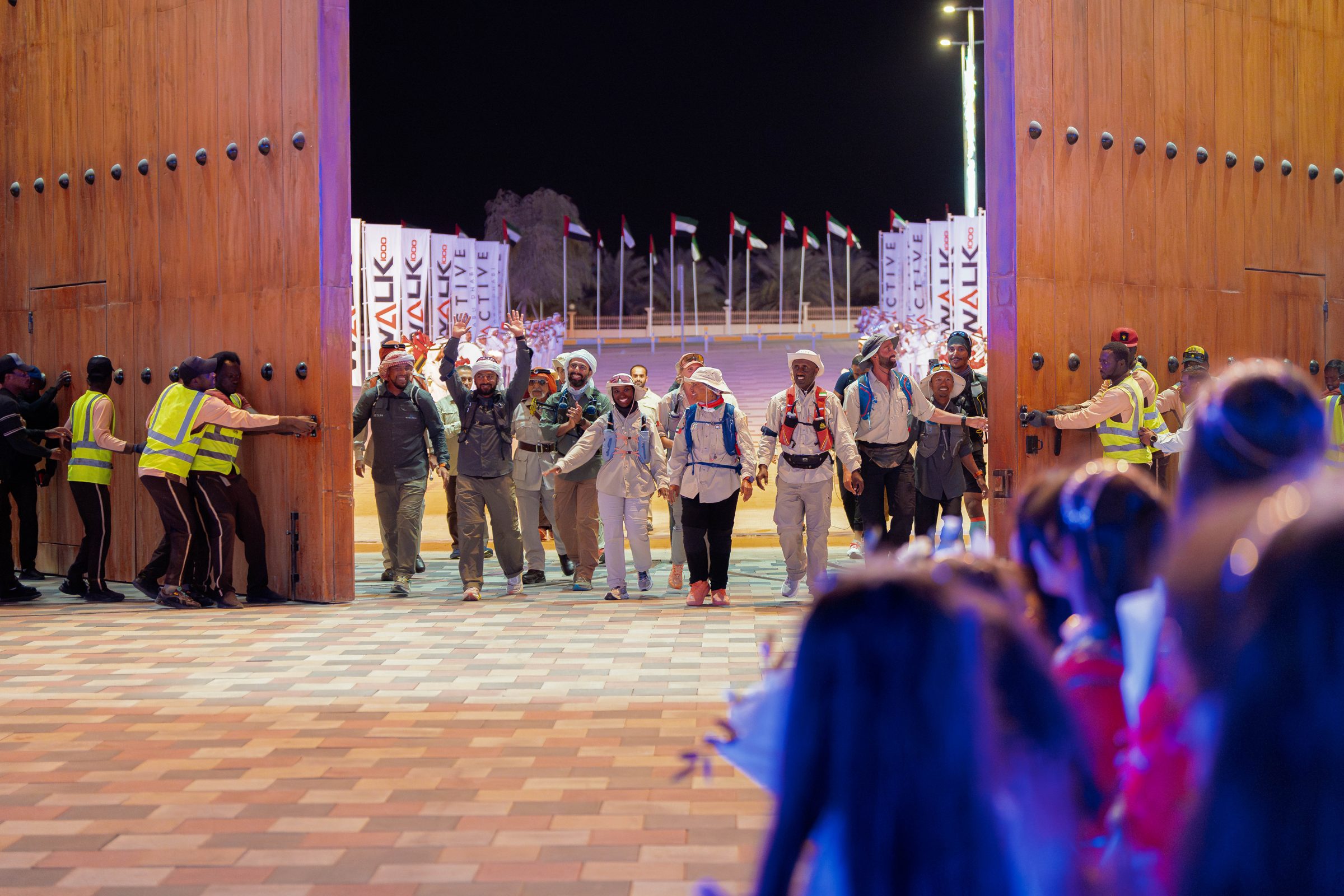
1,000 km
Through the Abu Dhabi desert
30 days
Three-quarters of a marathon a day
10 of 10
Finished, together
ACTIVE ABU DHABI
From one mission to an emirate-wide movement.
Walk1000 didn’t happen on its own. Around it, Active Abu Dhabi turned ten people’s challenge into a year of activity across the emirate. It came at the right time: Abu Dhabi was moving towards preventive health built on activity, diet, sleep and recovery. Those are the same things that get you through 1,000 km. You don’t get there by walking alone. You get there by looking after nutrition and recovery too.
We wanted lasting behaviour change, not just an event. So we adapted the COM-B model of behaviour change (capability, opportunity, motivation) into three principles.
Motivation
Inspiration
The mission itself: ten people walking 1,000 km through the desert.
Opportunity
Opportunity
More than 190 community events while the walk was under way, so people could take part themselves. One set a Guinness World Record with PureHealth: 3,870 people completing a remote 1 km in 24 hours.
Capability
Education
School talks: Mansour and the team spoke to more than 10,000 students in 2024.
190+
Community events
10,000+
Students reached in 2024
3,870
People in a Guinness World Record
HOW WE WORKED
What carried across all three
Put performance in charge
On a performance mission, decisions need to be made by the person closest to the performance. There’s no time for a board meeting. One person has to make the call, and be both responsible and accountable for it. That’s why I took on the dual role of project and performance lead.
Practice is for everyone
Every practice mission rehearsed the crew as much as the athletes: who works well together, who stays calm, and who fits which role.
Plan for things to go wrong
None of the missions went perfectly. Each one succeeded because the team and the plans were ready when things went wrong.
Work with people as they are
Six months isn’t long enough to change people. It is long enough to find their strengths and put them where those strengths count.
The date doesn’t move
Every mission had a finish line on a fixed day, so every plan worked back from it.
Give the team a mantra
A shared phrase lines up thinking and behaviour across a big group and makes decisions simpler, which matters most under pressure.
If you’re planning something that’s never been done, with a date it has to happen by, that’s the work I do.

