
CASE STUDY
Consistent stops. Fewer injuries.
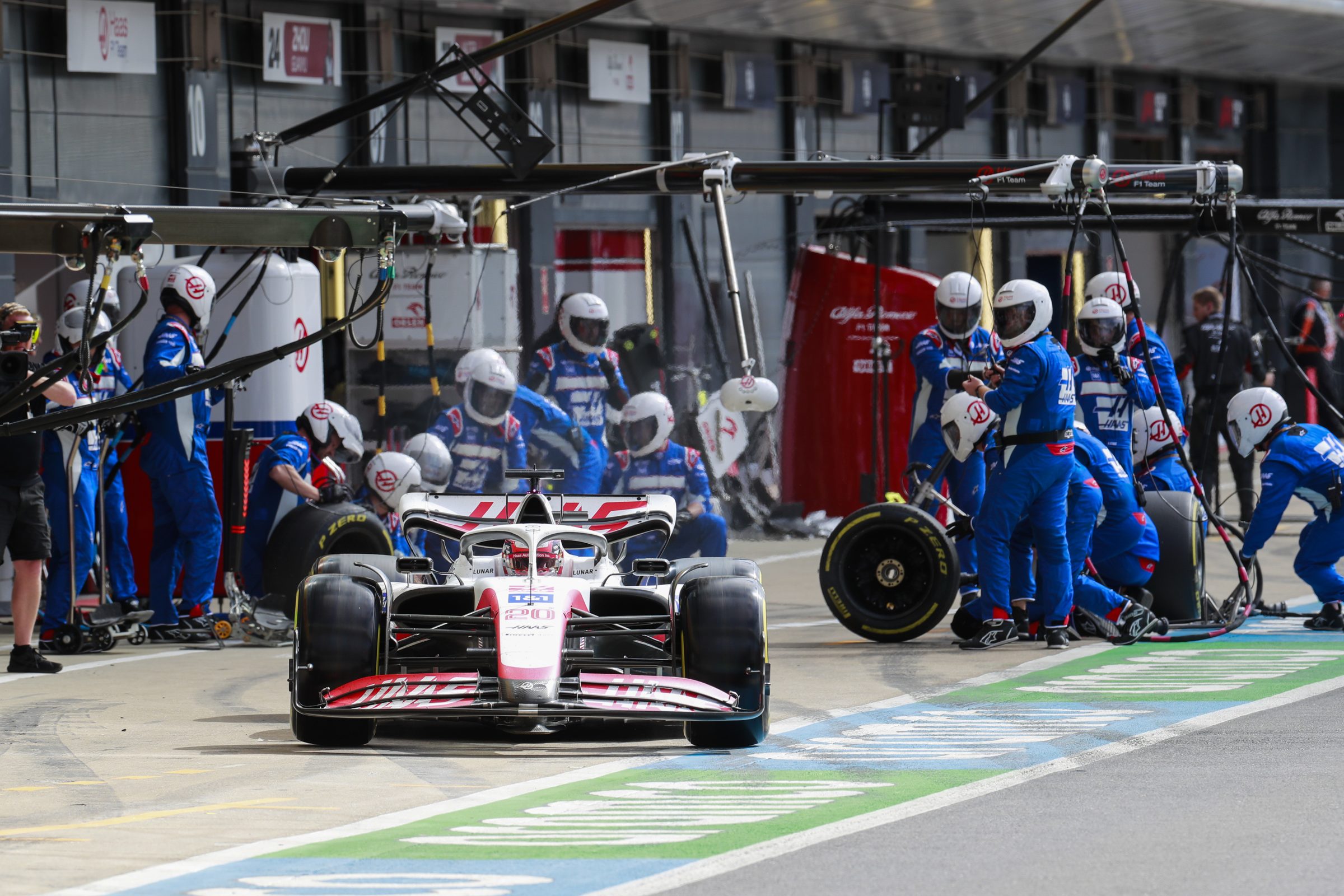
F1 Pit Stop Performance · Williams Racing and Haas F1 Team
Image: Haas F1 Team
AT A GLANCE
Williams Racing
Human Performance Specialist, 2017–2018
Haas F1 Team
Pit Stop Performance Lead, 2021–2022
THE CHALLENGE
A pit stop is a team performance measured in tenths of a second and repeated under the most public scrutiny in sport. What at first can seem like an attempt at all-out speed is actually a careful compromise. The asymmetry of risk is real: pushing harder might gain an extra 0.1 seconds, while a mistake that ends the race costs far more.
A pit stop is not about speed at all costs, and most of the gains come from mitigating risks that may never happen. But with a crew of 20 working long hours in a physically demanding job, travelling across multiple time zones, and with pit stops only a small part of their role, what does “performance” look like?
2.02s
Fastest pit stop of the 2017 Formula 1 season, Williams Racing
−35%
Lower back injuries at Williams, 2018
−26%
Lower back injury rate at Haas, 2021 to 2022, with heavier wheels
Williams Racing
Inheriting a very good pit stop system.
When I joined Williams, I was taking on a role in a very good pit stop system. The culture, the people and the mentality were in place from top to bottom. The team principal, the managers and all the mechanics wanted the same thing: to be fast.
Williams had set the world record for the fastest pit stop in 2016, so 2017 was going to be harder. As the record holders, you already have a target on your back. The wheel specification changed, and the new wheels were bigger and heavier. Other teams in the paddock had also invested heavily in equipment over the last few seasons to catch up with Williams.
There is only one crew.
Keeping the crew together
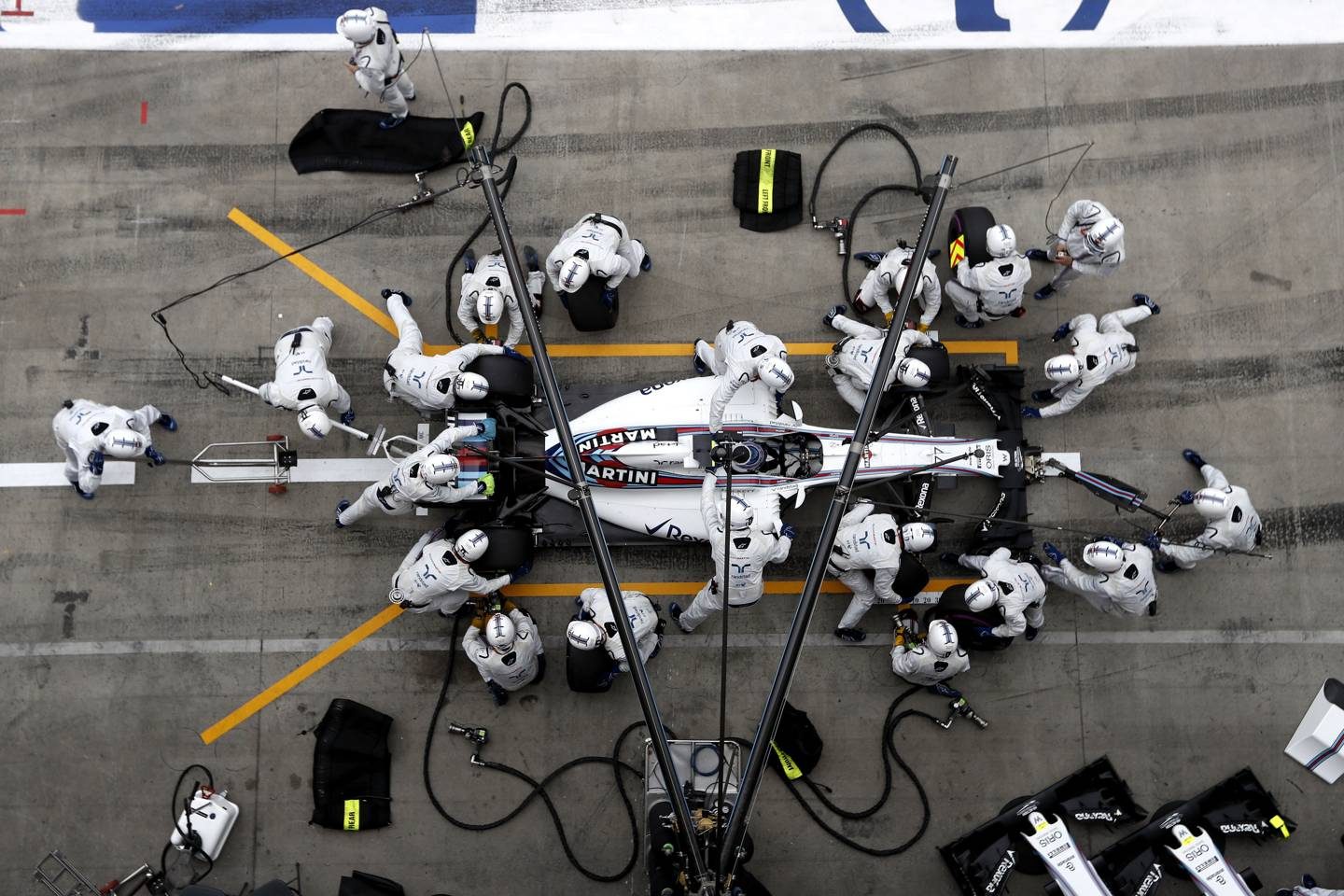
The speed and the support system were there, and the crew adapted well when things went wrong. The biggest risk to season-long consistency was injury. There is only one crew. If one person gets injured, someone has to step into their role, someone else has to step into that person’s role, and the knock-on effect runs right through the stop. So our first priority was keeping people injury-free and in their own positions.
We monitored injuries through the season and brought the number down with treatment and rehab, adapting group training to what we were seeing in the injury trends. By the end of 2017, lower back injuries were the most frequent, so in the off-season before 2018 we built the programme around targeted, specific exercises to prevent them. That was the biggest contributor to the 35% drop in lower back injuries.
Training the back-up crew
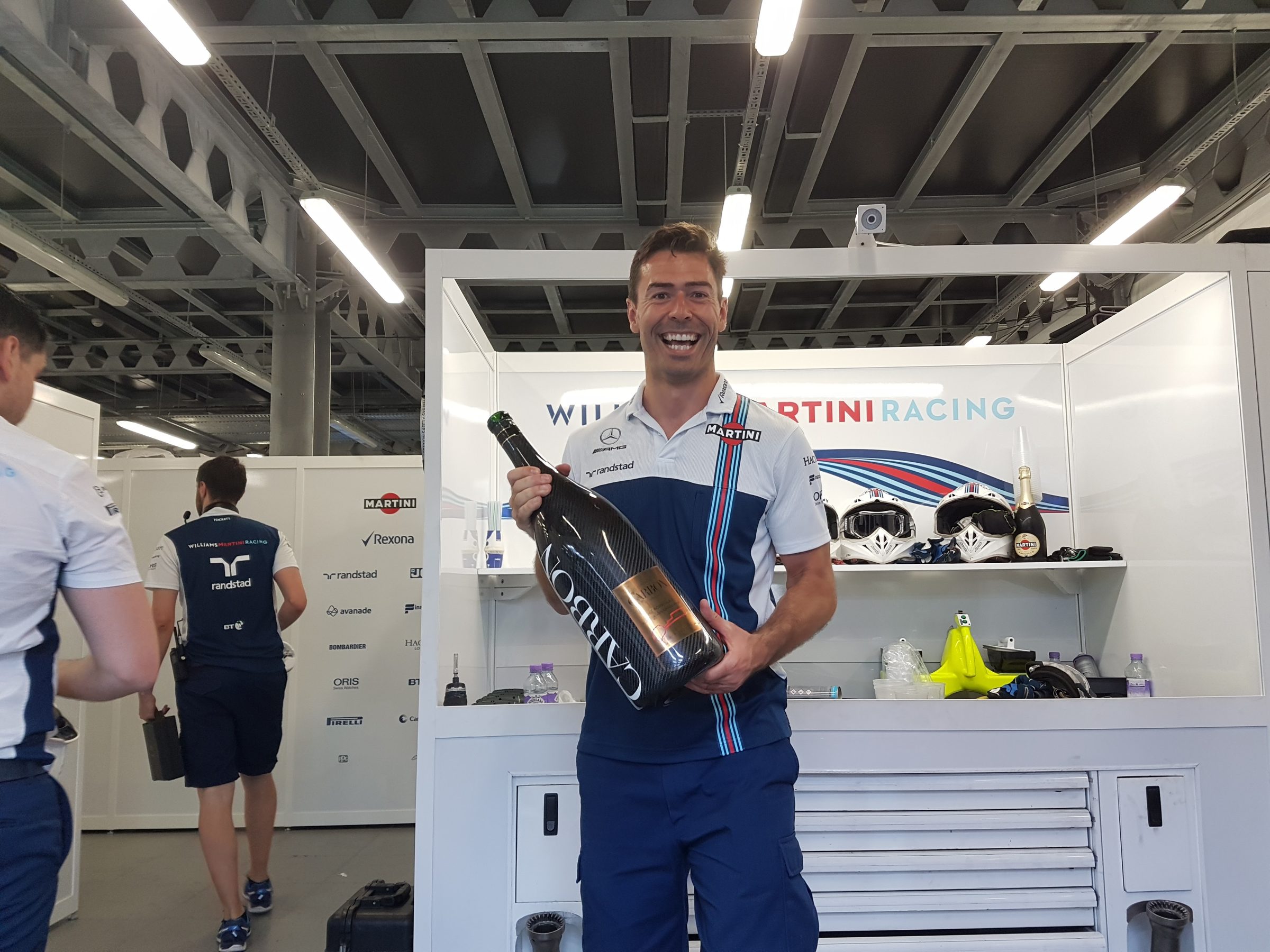
Our second priority was cover. The main crew get plenty of practice: pit stop practice four times a week at the track, with live stops on top. The back-up crew don’t, so we used time at the factory to keep them in touch with the skills. Each role is very specific. Gunning on the opposite side of the car means resisting the torque of the wheel gun going the other way. Wheel-on crew twist and rotate the wheel on, always from the rear of the car, so switching sides means a completely mirrored action.
THE CREW’S RESULTS
Fast was the start. Consistent was the work.
The speed was there from the start, but the consistency was built through 2017 by reducing errors and minimising the impact of injuries and crew changes.
2.02s
Fastest pit stop of the 2017 Formula 1 season, British Grand Prix
2nd
2017 DHL Fastest Pit Stop Award, with the fastest stop at 7 of 20 races, more than any other team
−28%
Reduction in overall injury rate, 2017
−35%
Reduction in lower back injuries, 2018
−26%
Reduction in overall injury rate, 2018
Haas F1 Team
Building the foundations.
Haas had good people, but the pit stop programme was at an earlier stage of development. The team was going through a difficult run of results, which is hard on everyone, the mechanics included. That gave us a broader scope of things to work on: small improvements were available in physical preparation, practice set-up and equipment.
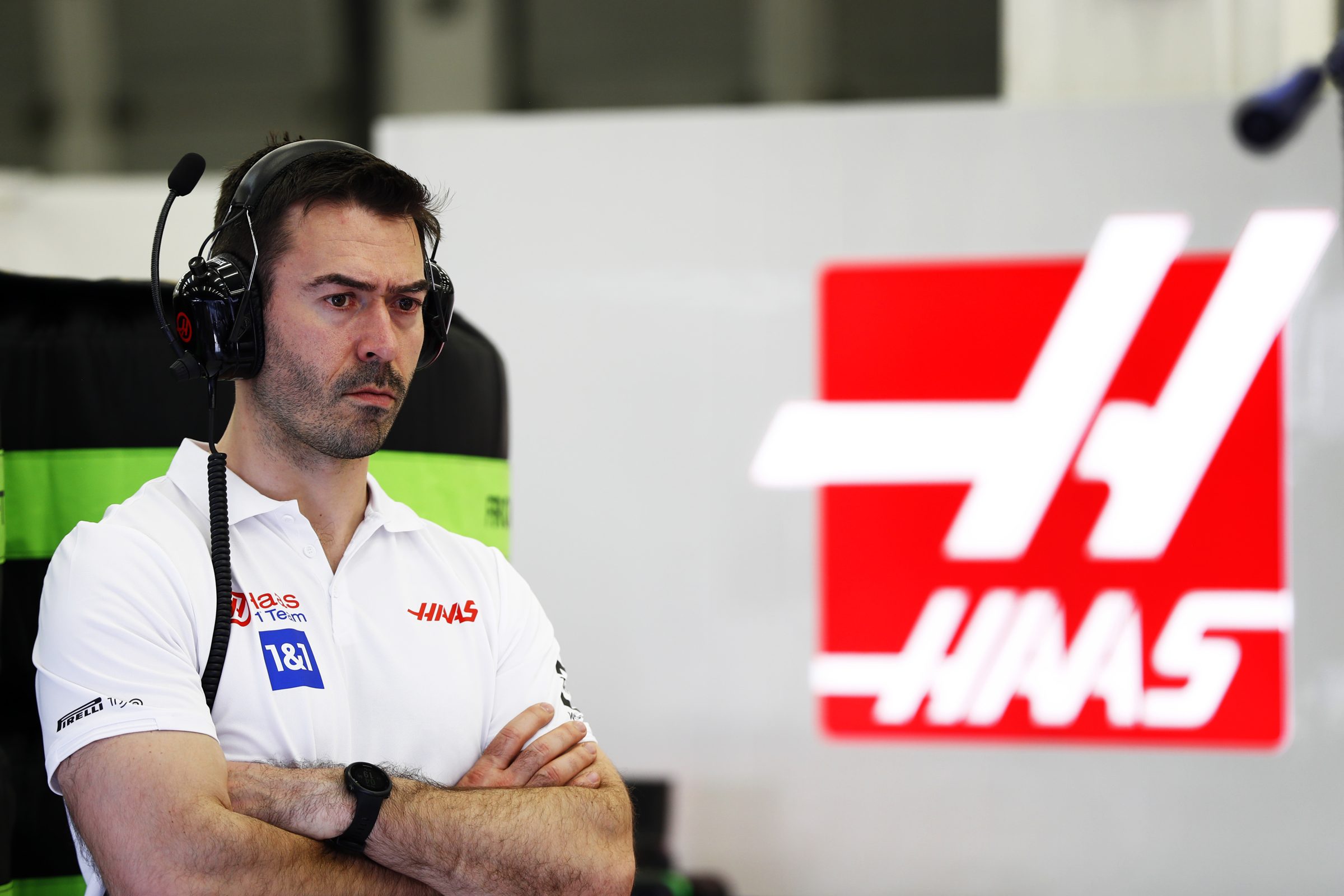
The first year was about laying the foundations: getting a programme in place and finding a good rhythm, starting with building relationships and trust within the team. We kept the training focus on injury prevention, because an injury when results are already difficult makes everything harder, and we trained people up for the spare positions. We built warm-ups, tweaked how practice was structured, brought the procedures into that practice and worked on communication within the crew, supported by physical testing and monitoring for the whole travelling race team.
2022: new kit, bigger wheels
Going into 2022, equipment was a known limiting factor, and leadership committed to investing in it, including new kit for the pit crew. That mattered for two reasons: better tools, and a clear signal that the team was serious about pit stop performance.
F1 regulations changed in 2022, moving from the traditional 13-inch rims to low-profile 18-inch wheels. Each wheel gained about 3.5 kg, taking the fronts to around 18 kg and the rears to around 21 kg. The wheels were also bigger, which made them more awkward to handle and required more flexion through the whole spine. The major concern was a rise in lower back injuries, which would disrupt not only pit stop performance but also crew members’ ability to do the rest of their job.
During the preparation for 2022, we focused our training on using the bigger wheels early and slowly increasing exposure, doing specific lower back prehab work at every session, and moving with good technique, so that doing their main job wouldn’t add to lower back load. That is why the 26% reduction in the lower back injury rate stands out: it came in a season when the wheels were bigger and heavier, and the risk of injury had gone up.
THE 2022 WHEELS
13″ → 18″
+3.5 kg per wheel
Fronts around 18 kg · rears around 21 kg
Bigger, heavier and more awkward to handle
−26%
Lower back injury rate, 2021 to 2022, in a season when the wheels got bigger and heavier
Beyond the crew
The pit wall and the driver.
The pit wall
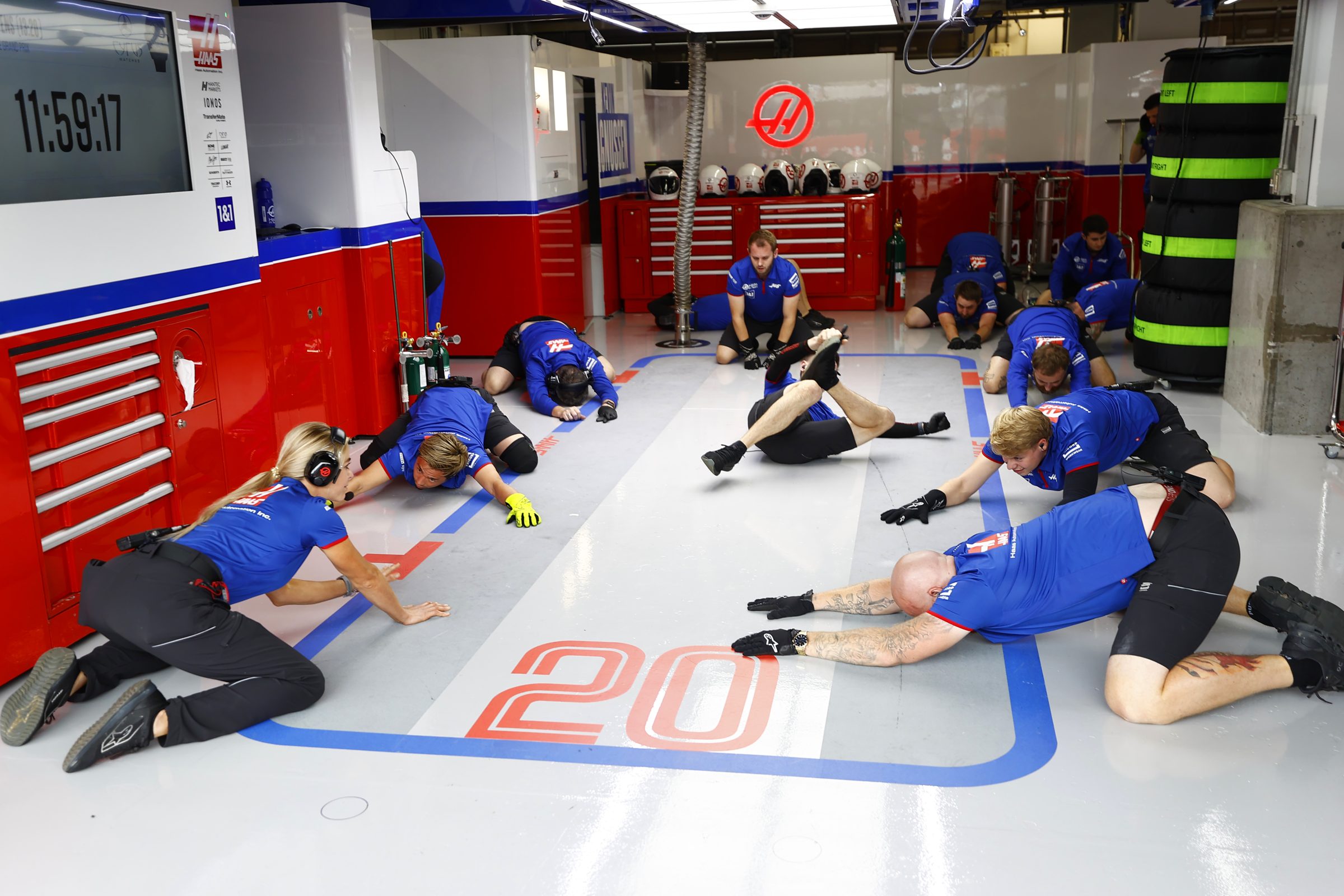
The crew is only part of the stop. At both teams there was a change in who led the pit stops from the pit wall: at Williams in mid-2017, and at Haas just as the 2022 season began. Everyone calls a pit stop in their own way, and the crew need to understand that voice and get used to it, so there are no surprises in a race. The same goes for the pit wall and the driver: when the call is made, and how late a stop can still be called.
The driver
Then there is the driver. Every driver brings the car into the box differently. Some arrive faster and brake harder, some are smoother, some take a slightly different line, and experience tends to bring consistency. The pit lanes differ too: clockwise or anti-clockwise, wide or narrow, and on some the pit box has to sit at an angle rather than square to the lane. All of this changes how predictable the car’s arrival is, and the crew has to be ready for it.
THE MODEL
Three groups, one pit stop
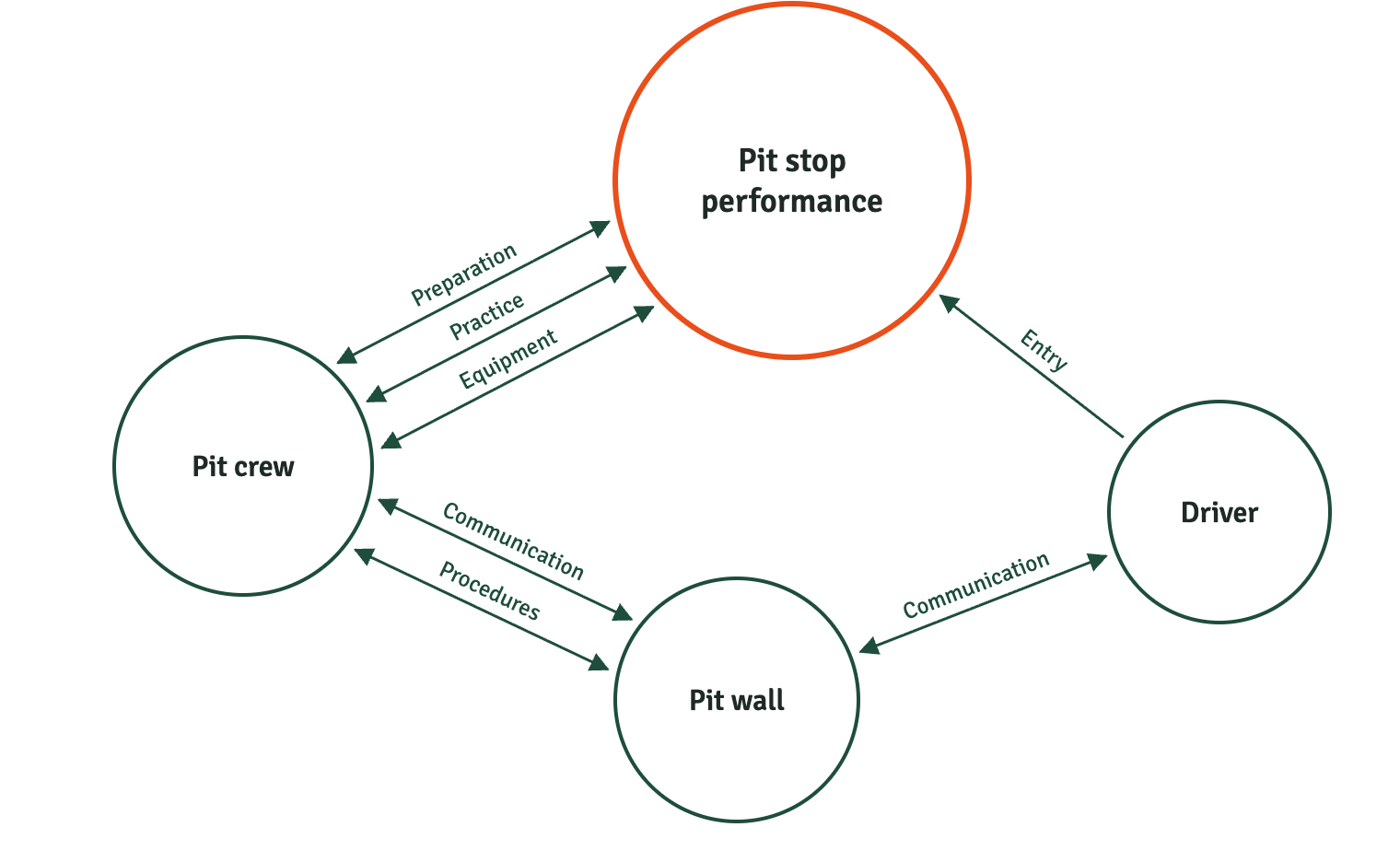
Across two teams and four seasons, pit stop performance came down to three groups of people and how they interact: the pit crew, the pit wall and the driver.
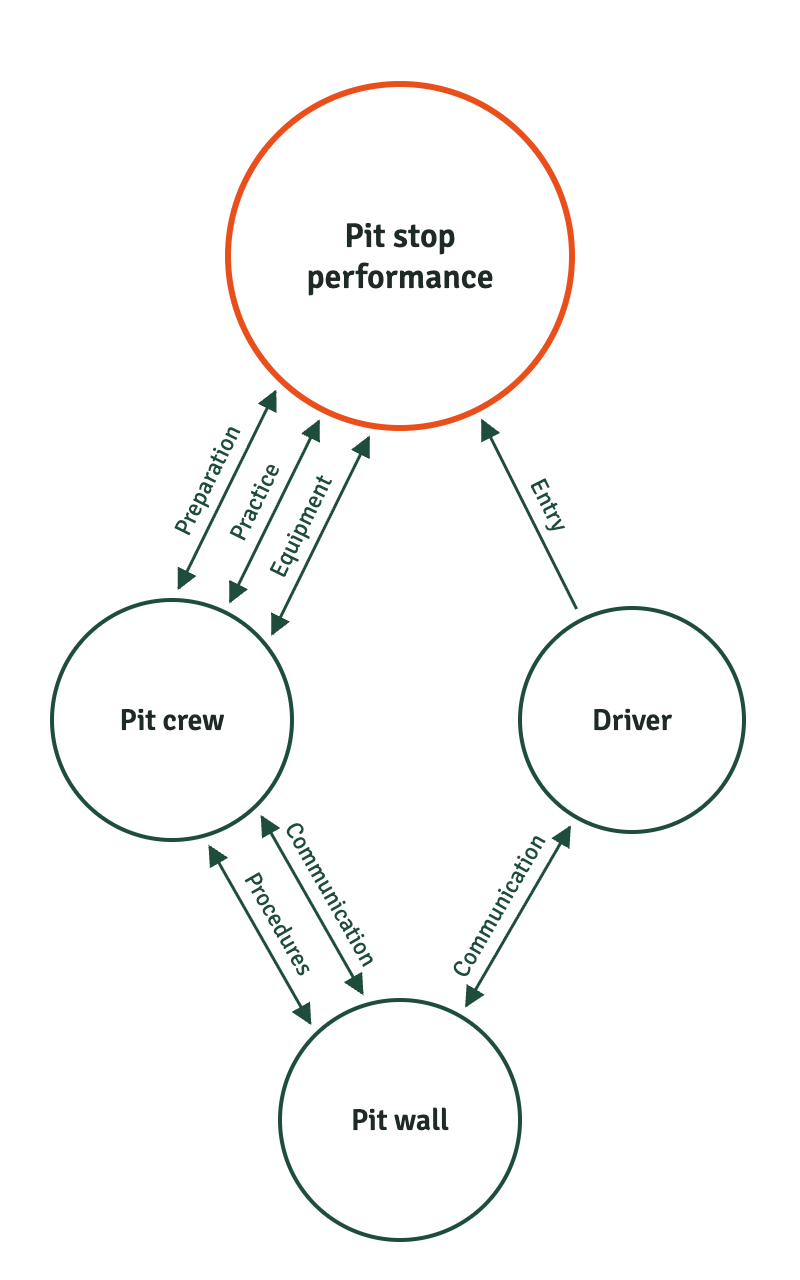
What connects them
| Connection | Who | What it means |
|---|---|---|
| Preparation | Pit crew | Physical and mental |
| Practice | Pit crew | For best- and worst-case scenarios, designed for learning |
| Equipment | Pit crew | Balanced between all-out performance and consistency |
| Procedures | Pit crew and pit wall | Agreed ways of working, formalised and rehearsed in practice |
| Communication | Pit wall, crew and driver | Clear calls and a shared understanding |
| Entry | Driver | How the driver brings the car into the box; outside the crew’s control, but it shapes every stop |
WHAT IT TAUGHT ME
When I started, I had the naive confidence of a young strength and conditioning coach: “If I get their gym programme right, they’ll go faster.” Performance is the outcome of many interlinked factors, none of which is solely responsible, but all of which contribute. Just like the pit stop itself, no one person can take the credit for a quick performance. Performance is a team sport.
The same is true of anything that has to work first time, in public, against the clock.

